
Buyer takeaway
- Match the grill basket style to the cooking scenario before negotiating price.
- Sample review should check stainless steel grade, thickness, edge finish, weld points, handle fit, and deformation risk.
- Private label buyers should confirm packaging, barcode, warning copy, carton marks, and approval rules before bulk production.
Direct answer for buyers
A good grill basket buying process starts by defining the cooking scenario, not by comparing the lowest unit price. Importers and private label brands should first decide whether they need a vegetable basket, fish basket, rolling basket, perforated grill tray, rotisserie basket, or a set that combines several styles. Then they should confirm stainless steel quality, mesh size, edge finish, handle structure, packaging route, warning copy, sample approval rules, and RFQ details. This keeps the quotation practical and reduces the chance of approving a sample that does not match the final retail plan.
Choose the basket style around the cooking job
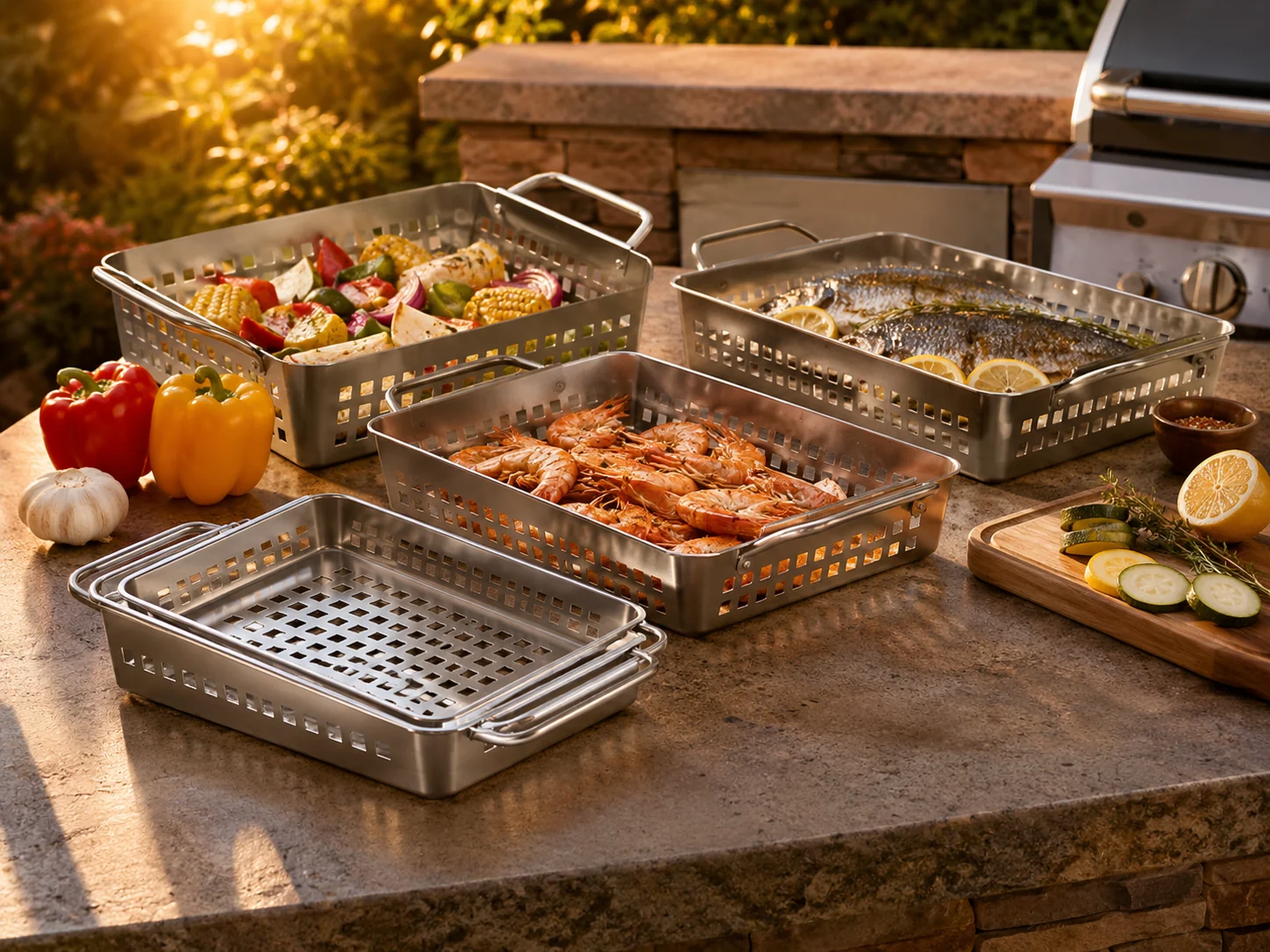
Different grill baskets solve different problems. A vegetable basket needs enough perforation for heat and smoke while keeping small pieces from falling through the grate. A fish basket needs a secure lock, a flat holding area, and a handle that lets the user turn delicate food without breaking it. A rolling grill basket is useful for vegetables, shrimp, wings, or mixed ingredients that need movement over heat. A perforated tray is easier to merchandise for general outdoor cooking. For wholesale buyers, the best choice is usually the style that explains itself quickly in photos, packaging, and product listings.
Compare stainless steel and construction details
The quotation should identify stainless steel grade, wire diameter or sheet thickness, perforation size, mesh spacing, surface finish, weld quality, corner radius, edge treatment, and whether any coating or plating is used on food-contact areas. During sample review, buyers should test hand feel, stiffness, deformation after heating, ease of cleaning, corrosion expectation, and whether sharp edges remain around holes or welded points. A cheaper basket may look similar in photos but use thinner steel, rougher edges, weaker welds, or a handle that loosens after repeated use.
Review handle, lock, and user safety
Handle design affects both safety and perceived quality. Buyers should confirm whether the handle is fixed, foldable, removable, extended, insulated, or packed separately. Fish baskets and rolling baskets need particular attention to lock strength, hinge movement, balance, and whether food may spill when the basket is flipped. If the product is sold through retail or e-commerce, the packaging should clearly explain heat warnings, glove recommendations, cleaning instructions, and the intended cooking scenario. Safety information is not only a compliance detail; it also reduces returns and negative reviews.
Plan packaging for retail, e-commerce, or promotional programs
A private label grill basket may use a color box, hang tag, belly band, insert card, kraft box, polybag with label, or e-commerce protective carton. Retail shelves need quick visual explanation and strong front-panel benefits, while online marketplaces need clear photos, compact packing, barcode labels, and stronger drop protection. Promotional programs may care more about carton efficiency and unit cost. Packaging should be discussed before sampling because box size, insert method, instruction sheet, logo placement, and carton quantity can change the landed cost and sample lead time.
Prepare private label and RFQ details early
A quote-ready RFQ should include reference photos or links, preferred basket style, dimensions, target material, thickness expectation, order quantity, destination market, sales channel, packaging route, logo needs, barcode requirements, warning text, carton marks, inspection points, sample expectations, and target delivery schedule. If the buyer has a target retail price or marketplace price band, sharing it early helps the supplier recommend a realistic material and packaging route instead of quoting a product that cannot reach the final price point.
FAQ for grill basket wholesale buyers
What is the best material for grill baskets? Stainless steel is commonly preferred because it is durable, cleanable, and suitable for high-heat outdoor cooking when the grade and thickness are appropriate. Which grill basket style should a private label brand start with? Many buyers start with a vegetable basket or perforated tray because the use case is easy to understand, then add fish baskets or rolling baskets for a broader range. What affects cost most? Steel thickness, basket size, handle structure, welding, polishing, packaging, MOQ, and sample requirements usually affect quotation. What should be checked before bulk production? Confirm sample dimensions, material, edge finish, handle fit, lock strength, packaging artwork, barcode, warning copy, carton marks, and inspection criteria.