
Buyer takeaway
- Wholesale skewer programs should start with the cooking format and sales channel, not only skewer length or unit price.
- Sample review should check steel thickness, tip finish, handle fixing, bag stitching, carton fit, and warning copy.
- A clear RFQ helps suppliers quote the practical version first and separate must-have private label changes from optional upgrades.
Direct answer for wholesale buyers
Before ordering BBQ skewers wholesale, buyers should define the skewer format, target food use, sales channel, material, thickness, handle design, packaging route, private label needs, sample review plan, and carton requirements. A flat stainless steel skewer set with a storage bag is a different sourcing project from a single corn holder, a push-bar fork, or a large shashlik kit. Treat them as different products in the RFQ.
Choose the skewer style around the cooking job
Flat skewers help reduce food spinning and work well for kebabs, meat strips, vegetables, and mixed grill sets. Round skewers may be cheaper and familiar, but they can be harder to control with some foods. Wide kebab skewers, fork-style skewers, push-bar skewers, and holder sets each solve a different use case. Buyers should decide whether the product is for backyard grilling, camping, gift sets, supermarket seasonal shelves, or online marketplace bundles before asking for the lowest price.
Review stainless steel, thickness, and tip finish
The quotation should state stainless steel grade, skewer width, thickness, length, surface finish, tip shape, edge treatment, and whether any coating or plating is used. During sample review, check stiffness, bending under pressure, sharpness at the tip, burrs along the edges, cleaning feel, and whether the skewers sit safely inside the package. A skewer that looks fine in photos can still feel weak if the steel is too thin or the edges are rough.
Check handles, storage bags, and set layout
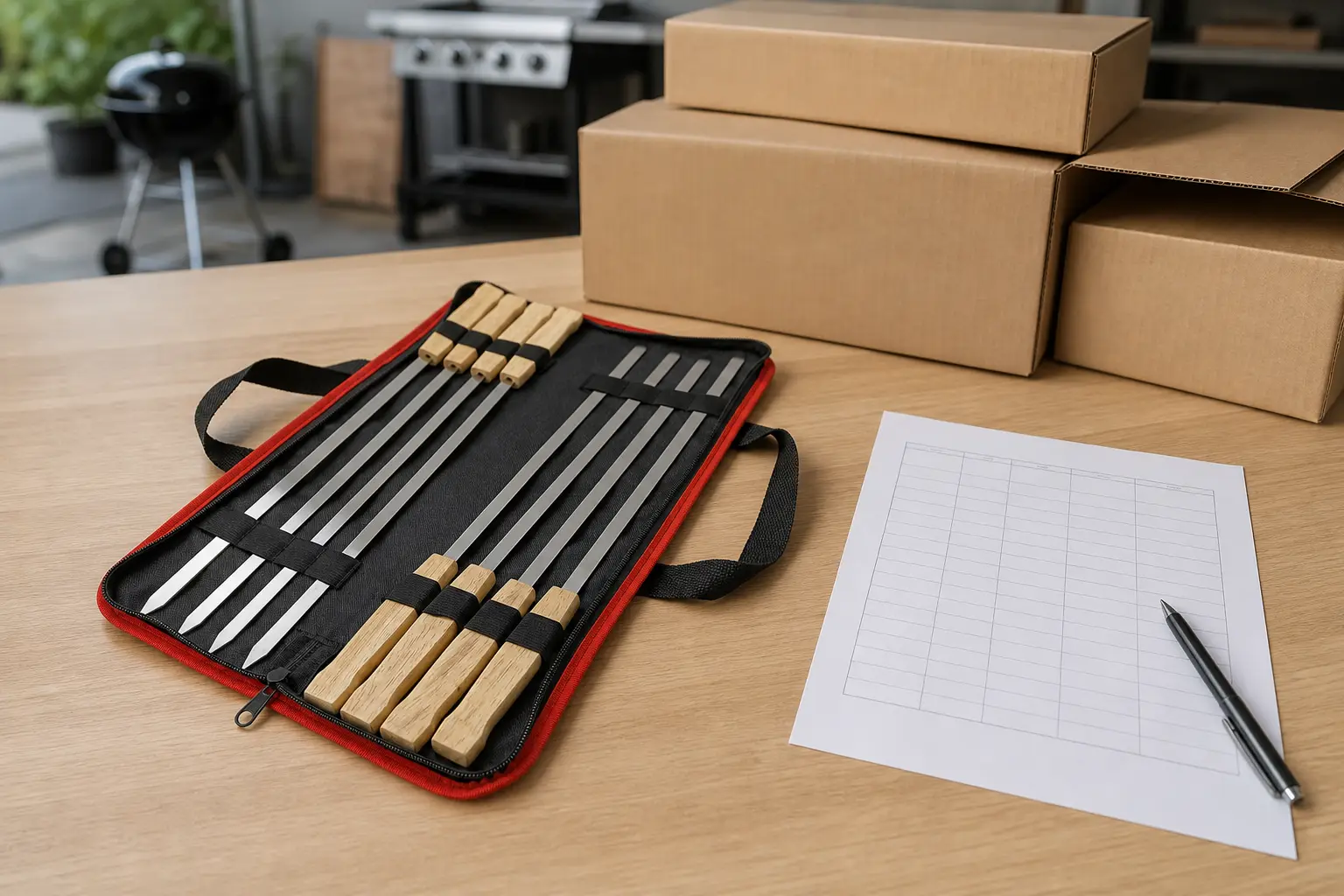
Wood handles, metal loops, detachable grips, and bare stainless handles all change the product. For wood handles, review sanding, fixing, cracking risk, size consistency, and whether the handle feels secure when the skewer is loaded. For storage-bag kits, open and close the bag, check stitching, zipper movement, elastic straps, handle placement, odor, and whether the skewers scratch each other in transit. The bag is part of the product, not just an accessory.
Plan packaging before approving samples
A skewer program may ship in a storage bag, color box, hang tag, belly band, blister pack, insert card, polybag, or e-commerce carton. Packaging affects barcode placement, warning copy, product photos, carton quantity, and landed cost. If the buyer wants a giftable kit, the sample should include the bag or box. If the buyer sells online, the sample should be checked as a packed parcel, not only as loose skewers on a table.
Private label changes to separate in the RFQ
Private label skewer requests can include logo on the bag, hang tag artwork, color box design, handle shape, handle color, changed set count, instruction sheet, barcode label, and carton marks. Some changes are simple artwork work. Others affect MOQ, tooling, sample time, or unit cost. List required changes first, then optional upgrades. This helps the supplier quote a workable version before discussing extras.
Sample checks that prevent avoidable complaints
A practical sample review should include hand feel, edge finish, tip safety, handle fixing, bend resistance, storage-bag fit, zipper and strap strength, packed weight, carton fit, warning copy, and basic cleaning. If the set targets skewered meat or heavy vegetables, load a sample and lift it by the handle. If it targets gift or marketplace sales, photograph the packed kit and check whether customers can understand the contents quickly.
Prepare a quote-ready RFQ
A useful BBQ skewer RFQ includes reference photos or product URLs, skewer style, length, width, steel thickness, handle material, set count, storage bag or packaging type, target quantity, destination market, sales channel, private label artwork needs, barcode requirements, warning copy, carton marks, sample expectations, inspection points, and delivery window. If the buyer is comparing several programs, ask for a good-better-best option instead of forcing one low-cost quote too early.
FAQ for BBQ skewer wholesale sourcing
Are flat skewers better than round skewers? Flat skewers can help reduce food spinning, but the right choice depends on the food, target price, and packaging plan. What affects skewer cost most? Steel grade, thickness, length, handle material, set count, bag or box quality, MOQ, and private label changes usually affect the quote. Should the storage bag be tested? Yes. Bag stitching, zipper movement, odor, elastic straps, and packed fit can create complaints even when the metal skewers are acceptable.
Related sourcing pages
- BBQ skewer category
Compare single skewers, fork styles, push-bar options, and reusable kebab formats.
- BBQ tool set category
Review skewer kits that belong in broader grilling tool or gift-set programs.
- 8-pack reusable kabob BBQ skewers with storage bag
See the product format used as the image reference for this sourcing article.
- OEM and private label BBQ accessories
Prepare logo, packaging, barcode, carton mark, and sample approval details before bulk production.
- Send an RFQ to Grillive
Share product URLs, quantity, target market, packaging route, and sample expectations for a faster quotation.