
คำถามผู้ซื้อ
- Burger press sourcing should start with the burger format, target channel, press diameter, handle feel, and packaging route.
- Sample review should check 430 stainless steel finish, handle welds, base flatness, patty release, packed protection, and warning copy.
- A quote-ready RFQ should separate the standard press from private label packaging, barcode labels, carton marks, sample rules, and delivery dates.
Direct answer for wholesale buyers
Before ordering burger presses wholesale, buyers should confirm the target burger format, press diameter, 430 stainless steel expectation, handle structure, base flatness, edge finish, packaging route, warning copy, sample review plan, carton marks, and delivery window. A small stainless press for kitchen or flat top use is a different buying project from a heavy cast iron smash burger press, so the RFQ should name the cooking job first.
Start with the flat top cooking job
The June BBQ digest again showed interest in flat top grills, budget grilling accessories, summer tool roundups, and safety guidance. For importers and retail buyers, the durable question is whether a small accessory earns its place in a flat top or burger program. A burger press can work as a standalone kitchen tool, a griddle add-on, or part of a smash burger kit, but each route needs different packaging, photos, and sample checks.
Check diameter, weight, and base flatness
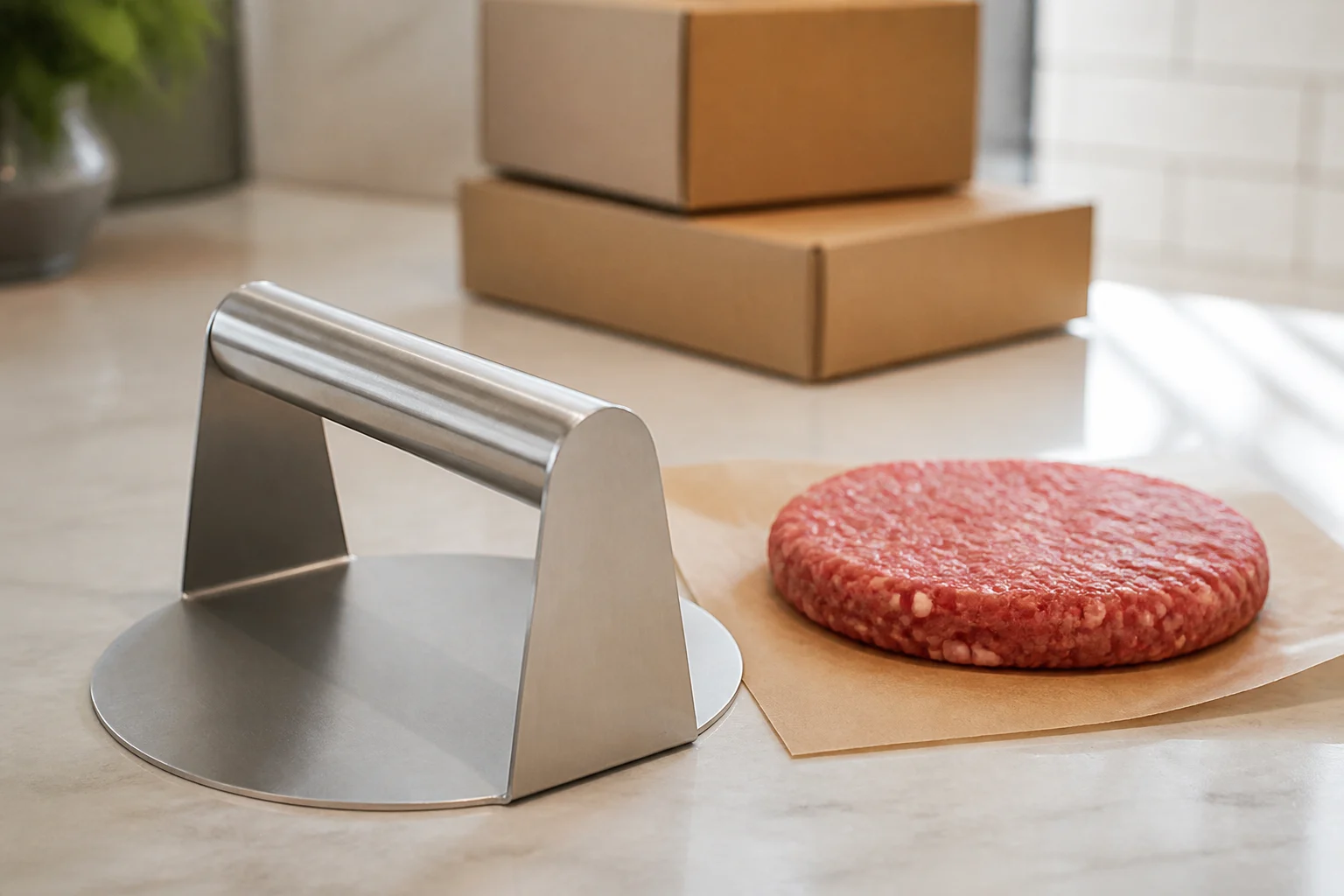
The Grillive reference product is listed as a 430 stainless steel hamburger meat press with a 5.51 x 5.51 x 2.91 inch size and a listed weight of 0.59 lb. Buyers should verify those numbers on the sample. Press a cold patty on parchment, check whether the base sits flat, and compare patty diameter with the target bun or griddle menu. The press should form an even patty without rocking or leaving sharp edge marks.
Review handle welds and hand feel
A burger press looks simple, which is why weak details are easy to miss. During sample review, check both handle supports, weld finish, tube edge treatment, base edge smoothness, and whether the press flexes under normal hand pressure. Run a gloved hand around the metal edges. The product should feel clean and new, with no rough welds, loose handle movement, or surface marks that make it look returned before sale.
Match packaging to the sales channel
The reference product uses a poly bag plus brown box route with 36 pieces per carton. That may be enough for basic wholesale or foodservice supply. Retail and marketplace programs may need a color box, sleeve, barcode label, instruction sheet, product photography, or extra protection around the handle. Review a packed sample before approving the price, because box style and carton quantity can change landed cost.
Keep claims and warning copy controlled
Packaging copy should explain food-contact use, cleaning, safe handling, children safety, and whether the item is intended for cold forming or use near a hot cooking surface. Do not add unsupported non-stick, heat-proof, restaurant-approved, or certification claims just to make the box sound stronger. If the buyer needs local compliance wording, keep the artwork editable until that wording is confirmed.
Prepare a quote-ready burger press RFQ
A useful RFQ includes product reference photos or URLs, target burger size, material expectation, diameter target, weight target, order quantity, destination market, sales channel, packaging type, private label artwork needs, barcode requirements, warning copy, carton marks, sample expectations, inspection points, and delivery window. Ask for photos of the loose press, the patty test, the packed sample, and the master carton before approving production.
FAQ for burger press sourcing
What should buyers check first on a burger press sample? Start with diameter, weight, base flatness, handle welds, edge finish, patty release, and packed protection. Is stainless steel grade enough to judge quality? No. Grade matters, but flatness, weld quality, finish, packaging, and inspection rules also affect buyer risk. Should the buyer choose stainless steel or cast iron? Use stainless steel when clean appearance, lighter weight, and easier packaging matter; consider cast iron when the program specifically needs a heavier smash burger press.
Related sourcing pages
- Stainless steel hamburger meat press
Review the Grillive burger press format used as the image reference for this sourcing article.
- Griddle accessories category
Compare burger presses with spatulas, scrapers, squeeze bottles, and flat top grill kits.
- BBQ accessories category
Build burger presses into a wider seasonal barbecue accessory assortment.
- OEM and private label BBQ accessories
Prepare packaging artwork, warning copy, barcode labels, carton marks, and sample approval details.
- Send an RFQ to Grillive
Share product URLs, quantity, target market, packaging route, and sample expectations for a faster quotation.